
Meta EdgeRank: What It Is And How It Controls What You See On Facebook & Instagram
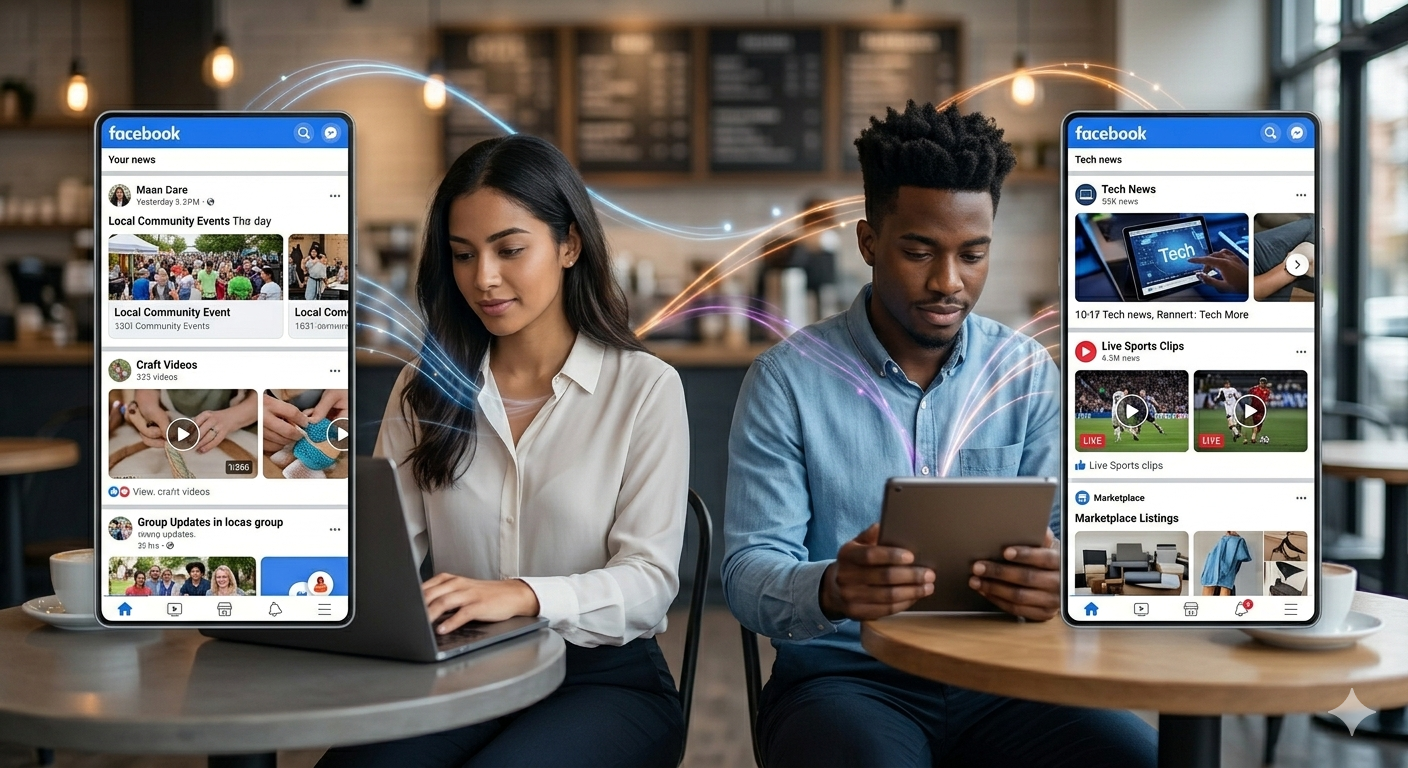
If you ever wondered why a post on Facebook or Instagram went into the void of very few likes and almost no reach, that’s your first taste of how Meta EdgeRank works. You simply never knew it had a name.
EdgeRank is Meta’s algorithm. It is the invisible hand that selects which posts will appear in your feed, who gets prominence and who gets buried. Initially developed for Facebook in 2010, the idea has come a long way, but the basics remain true: not all posts were created equal, and Meta’s system repeatedly determines what is deserving of your attention.
Where It All Started
The response was swift when Facebook rolled out the News Feed in 2006. People hated it. All of a sudden, everyone of what your friends did was basically there — every wall post, every photo tag/photo upload status update. It felt invasive.
However, as the platform became larger and more users joined in, the reverse problem appeared. So much content, so little time. You couldn’t possibly scroll through all of it from your 400 friends, 15 brand pages and 6 Facebook groups. Noise had to be filtered out somehow by something.
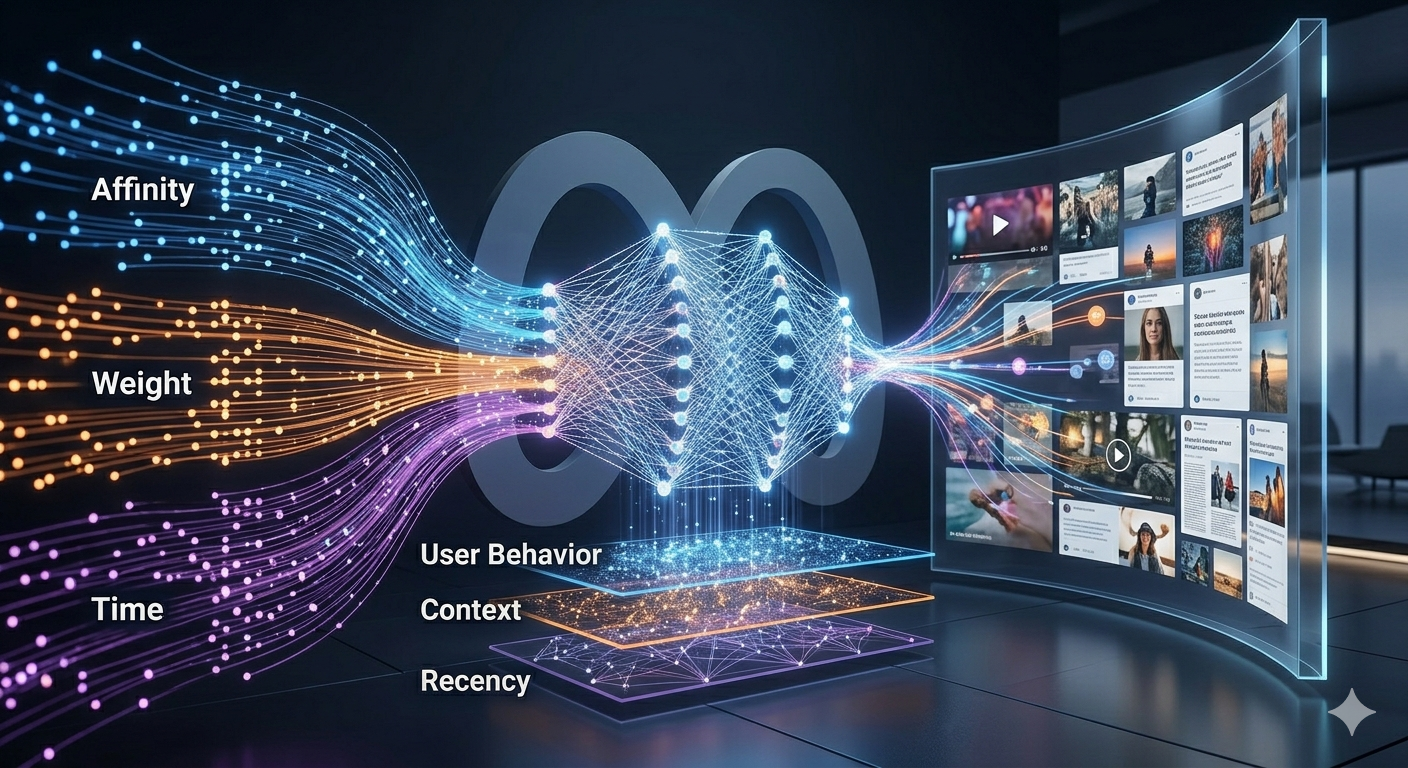
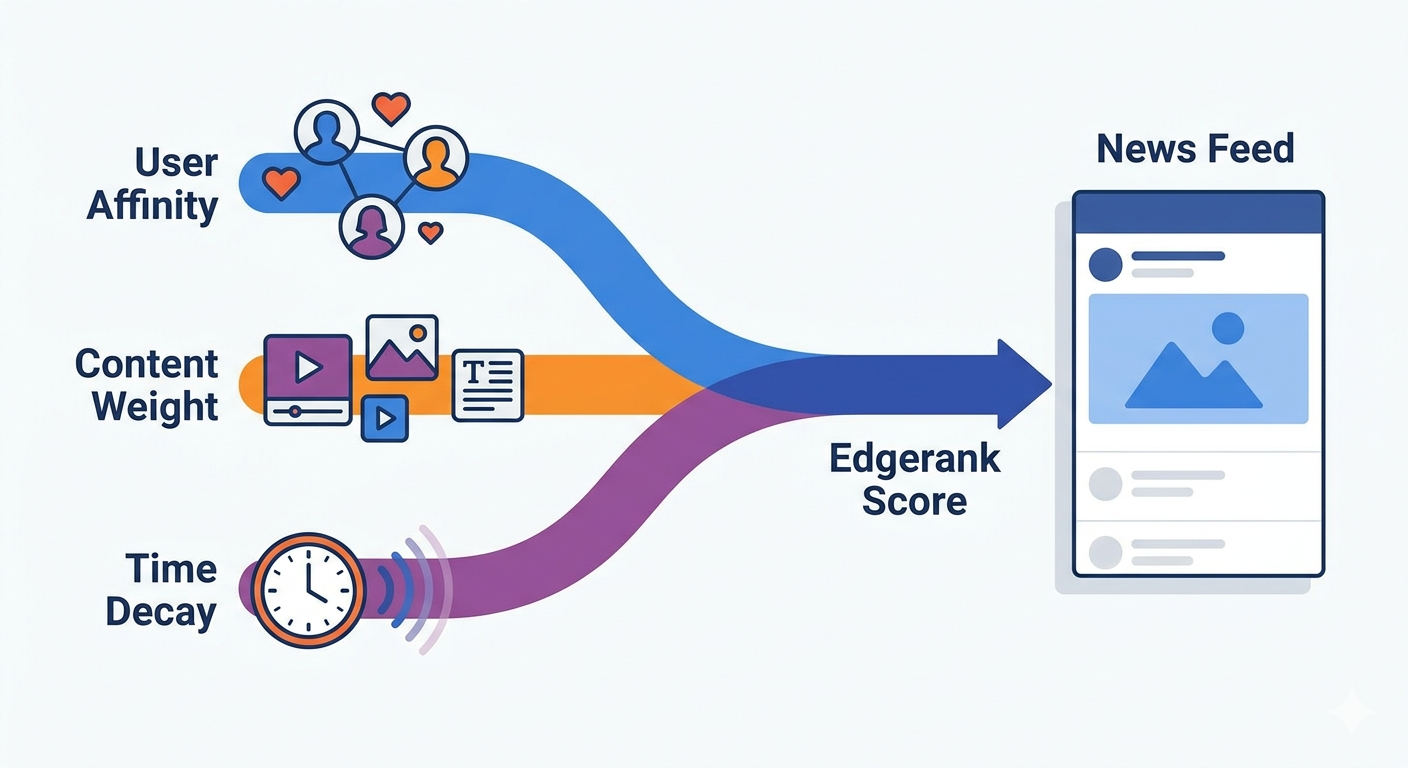
Enter EdgeRank. Facebook engineers created a score for each piece of content every “edge,” based on three variables: affinity, weight, and time decay. Affinity accounted for how closely related you were to the person posting. Weight grouped the kind of interaction (a comment greater than a like). Time decay quickly rendered older posts even less relevant. Basic, however brilliant sufficient for 2010.
How It Works Today
Contemporary EdgeRank is very different from that original three variable equation. Machine learning, behavioral signals, and thousands of ranking factors have been layered into Meta. Instead, the algorithm now considers how long you linger on a post while scrolling, if you watched a video to its completion, if you privately share something via DM rather than publically sharing it, and even how often you return to visit someone’s profile.
It’s also platform-specific now. Both Facebook and Instagram feeds work by broadly similar principles, but use different weighting systems. For example, Reels is getting a lot more traction from both platforms atm because Meta is pushing short-form video to compete with TikTok. Coincidence — the algorithm embodies business priorities, not merely user preferences.
You have also multiple feed that you need to take care of. There is the ability for “Friends & Family” posts and even “Recommended Content”, which Facebook has. And you can have a main feed, Explore, Reels and Stories on Instagram. Ranking logic is different for each surface. A post that flies in one placement hardly registers onscreen in another.
What Actually Moves the Needle
So for everyone managing a page, trying to grow an audience: Understanding EdgeRank is not academic, it is practical. Here are some things that continually affect how content gets ranked:
Engagement velocity matters enormously. When a post receives high engagement (reactions and comments) in the 30 minutes after it is published, this signals quality to the algorithm and it distributes posts further. This is why timing your posts when your audience is most active actually matters.
Meaningful interactions outweigh passive ones. A comment (especially a longer one) has significantly more value than a like. It’s not the case with shares, especially when someone adds an own caption while sharing and not doing a silent share. Which is why challenge posts or time beakers (controversial or thought evoking) almost always go farther than carefully curated, safe content.
Content format influences reach. Native video, particularly Reels receive preferential treatment on Facebook and Instagram right now. External links (certianly external links to other websites) get suppressed as that is driving people off of Meta, which Meta hates.
And much is to do with your past relationship history. Engage with your content regularly, and they are far more likely to see what you post next. This results in a sort of compounding effect where early fans continue to see and interact with your work, indicating to the algorithm that it has value and should be spread more widely.
EdgeRank is a sore spot for many, especially small businesses and creators who remember organic reach being anything you could actually count on. Facebook Pages used to reach 16% of their followers on average. That figure is today more like 2-5% these days, sometimes much less.
Which is just as much of a business decision as it is a technical one; they’ve leaned into paid distribution to fill that gap.
But the algorithm is not going to be flip-flopping head over heels. At the very least, it is only going to become more complex. One of the most useful things you can still do if you want your content to actually be seen by people on Meta’s apps is understanding how EdgeRank works: what it rewards, penalizes and completely ignores.